Festivalimpressions 2014 - Wednesday, 26.11.
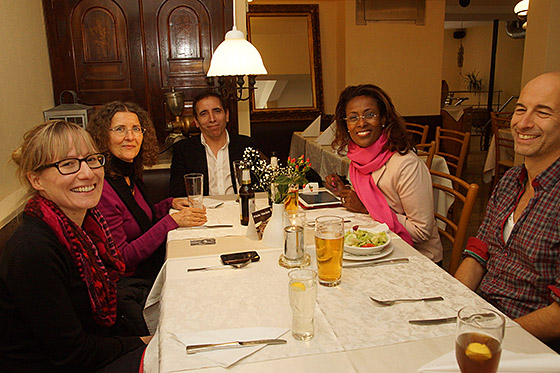
It is delightful, that the Iranian filmmaker Mohsen Makhmalbaf has the chance during his short visit to have a lively exchange with our guest Meaza Ashenafi (after her return from the activities around the Day No to Violence Against Women in Berlin) and film director Andreas Kleinert during the lunch at Alte Kunst. They also discuss the ideas of a possible cooperation in the future.

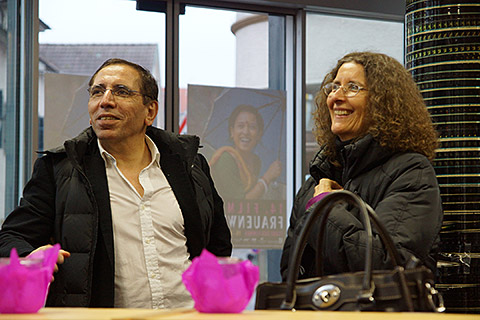 Mohsen
Makhmalbaf, founder of the New Iranian cinema, who lives in exile in
Europe, is very happy - as a long-time friend and companion of the Film
Festival - to be back in Tuebingen.
Mohsen
Makhmalbaf, founder of the New Iranian cinema, who lives in exile in
Europe, is very happy - as a long-time friend and companion of the Film
Festival - to be back in Tuebingen.
 Irene
Jung, Meaza Ashenafi and Mohsen Makhmalbaf present the TERRE DES FEMMES
flag “Free Living Without Violence”, which is hoisted already
for years on the 25th of November – Day NO to violence against
women – in hundreds of cities in Germany, but also all over the
globe. Meaza will take the flag with her to Ethiopia.
Irene
Jung, Meaza Ashenafi and Mohsen Makhmalbaf present the TERRE DES FEMMES
flag “Free Living Without Violence”, which is hoisted already
for years on the 25th of November – Day NO to violence against
women – in hundreds of cities in Germany, but also all over the
globe. Meaza will take the flag with her to Ethiopia.
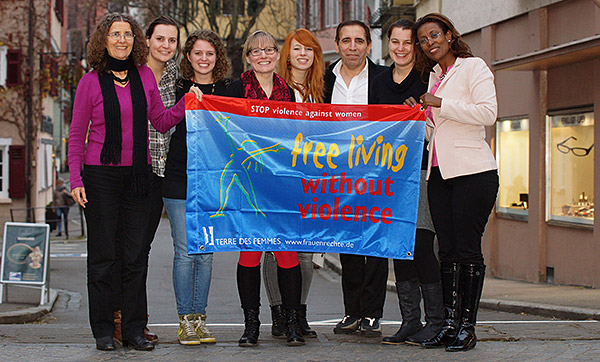
The whole Film Festival team with Mohsen Makhmalbaf and Meaza Ashenafi.
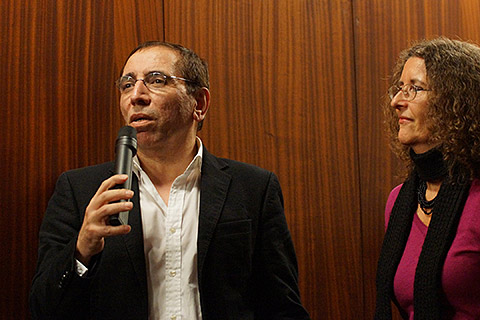 After
the screening of „Baba
Film Darad – Daddy’s
School“ Mohsen tells about his filmschool
After
the screening of „Baba
Film Darad – Daddy’s
School“ Mohsen tells about his filmschool
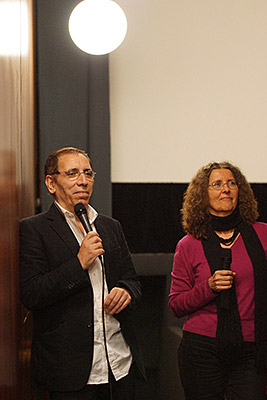
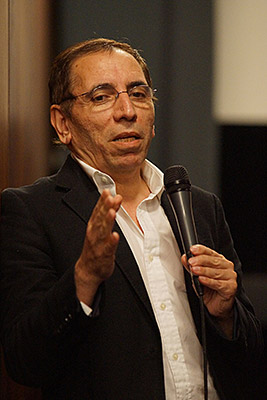
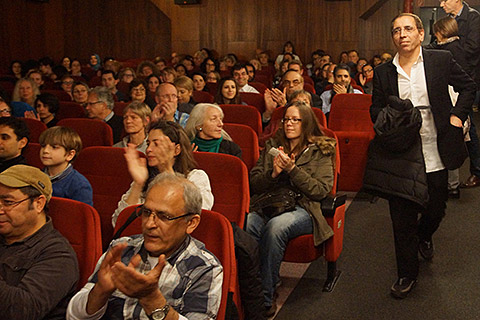 Well-attended
was the closure screening with “The Gardener”, a filmic reflection
about religion, peace and women’s rights. Mohsen argued and shoot
this feature film together with his son Maysam.
Well-attended
was the closure screening with “The Gardener”, a filmic reflection
about religion, peace and women’s rights. Mohsen argued and shoot
this feature film together with his son Maysam.
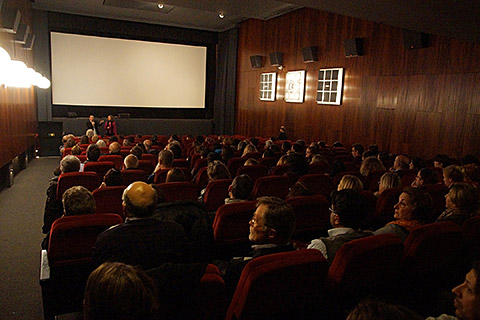
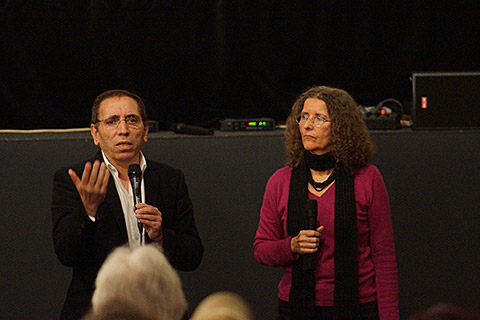 Mohsen
tells the fascinated audience about the challenge which meant his film
work in israel and for the ruling regime in his home country, that it
has an enormous importance for the local population, as they almost know
nothing about the century-old Bahai religion in Iran. This religion is
characterised by its peacefulness, but nevertheless it’s members
are persecuted and discriminated against by the Iranian regime since
the beginning of it’s existence. Mohsen offers a detailed description
of his postulate for a peacefully society without violence.
Mohsen
tells the fascinated audience about the challenge which meant his film
work in israel and for the ruling regime in his home country, that it
has an enormous importance for the local population, as they almost know
nothing about the century-old Bahai religion in Iran. This religion is
characterised by its peacefulness, but nevertheless it’s members
are persecuted and discriminated against by the Iranian regime since
the beginning of it’s existence. Mohsen offers a detailed description
of his postulate for a peacefully society without violence.
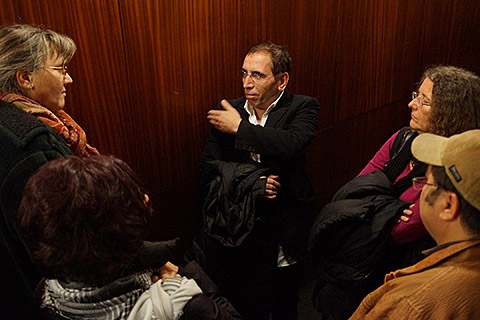 Mohsen
explains that he and his son Maysam in the film represent the attitude
of the older and younger generation of Iranian people which both wish for
more freedom and democracy, but with different ideas of how to achieve
it and which role the religion may play in this aspiration.
Mohsen
explains that he and his son Maysam in the film represent the attitude
of the older and younger generation of Iranian people which both wish for
more freedom and democracy, but with different ideas of how to achieve
it and which role the religion may play in this aspiration. 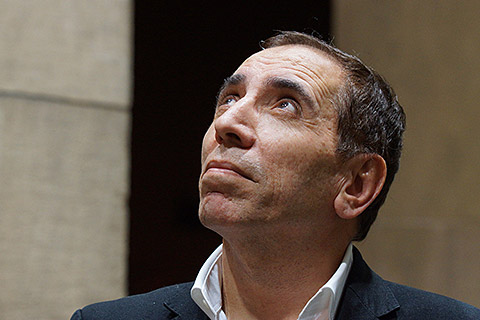

Photos: Alexander Gonschior