Festivalimpressions 2014 - Sunday, 23.11.
 Lawyer Meaza
Ashenafi travelled all the way from Ethiopia to present the film “Difret”,
which is based on her own story, and she is happy to get the chance to
exchange views with other Film Festival guests…
Lawyer Meaza
Ashenafi travelled all the way from Ethiopia to present the film “Difret”,
which is based on her own story, and she is happy to get the chance to
exchange views with other Film Festival guests…
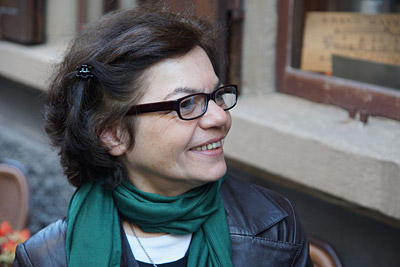 … as
with Monireh Baradaran, one of the protagonists of “My Stolen Revolution”.
She came to the Film Festival to tell her life story: First she fought
in the movement against the Shah in Iran. But soon after the fall of the
Shah she suffered years of imprisonment and torture by the Islamic regime
because she was a left-wing activist.
… as
with Monireh Baradaran, one of the protagonists of “My Stolen Revolution”.
She came to the Film Festival to tell her life story: First she fought
in the movement against the Shah in Iran. But soon after the fall of the
Shah she suffered years of imprisonment and torture by the Islamic regime
because she was a left-wing activist.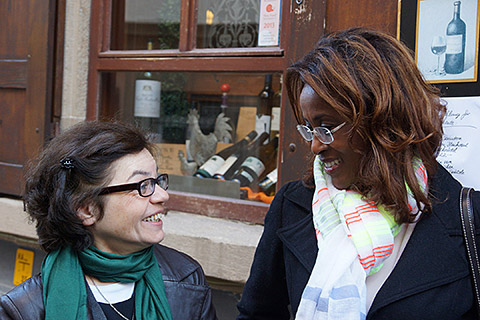
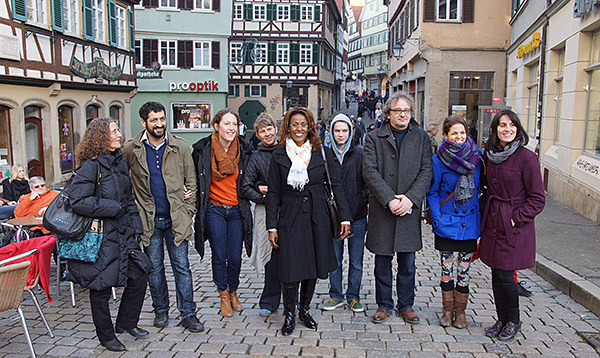
City
walk through the old town centre of Tuebingen with festival director Irene
Jung, festival guests Bülent Yilmaz & Christina Schiewe (Be My
Baby), Sandra Brandl & son Gustav (Flowers Of Freedom), Meaza
Ashenafi, Christian Vizi (Flowers Of Freedom) and Lisa und Lena from the festival
team.
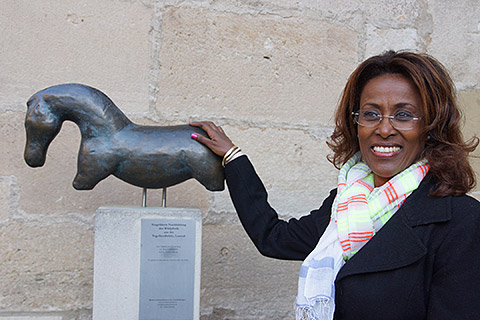 Meaza
Ashenafi at Hohentübingen castle
Meaza
Ashenafi at Hohentübingen castle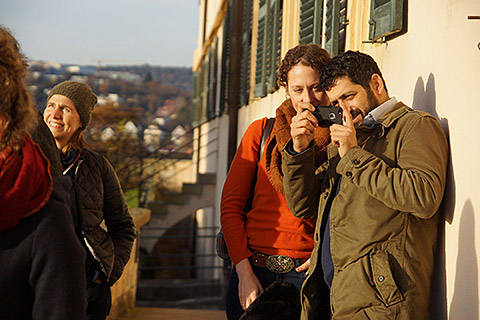 Mirjam
Leuze, Christina Schiewe and Bülent
Yilmaz enjoy the view over Tübingen
Mirjam
Leuze, Christina Schiewe and Bülent
Yilmaz enjoy the view over Tübingen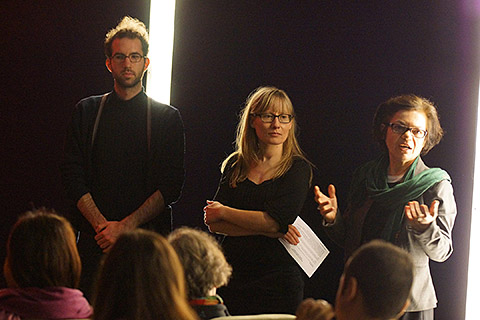 After
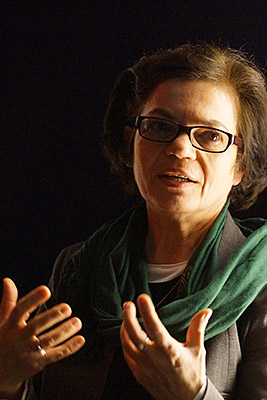
the film “My Stolen Revolution” festival coordinator Kathrin
Frenz had a very emotional conversation with Monireh Baradaran and Mitja
Seibold from Amnesty International.
After
the film “My Stolen Revolution” festival coordinator Kathrin
Frenz had a very emotional conversation with Monireh Baradaran and Mitja
Seibold from Amnesty International.
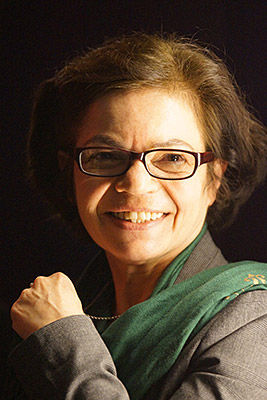
Monireh deeply impressed the audience with her strength und positive view
of life, things she never lost, even after 9 years of imprisonment in Iran
under cruel conditions.
Roundtable Conversation on the topic „Women in Precarious Working
Conditions“
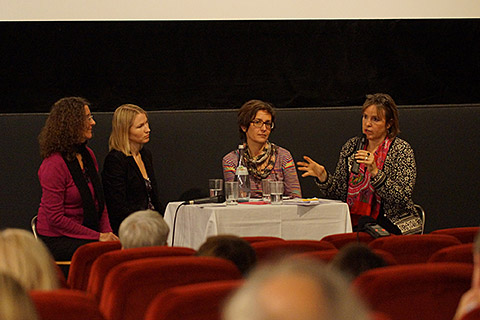 Irene
Jung, Monika Schäfer (director „Aufstand der Putzfrauen“),
Margrit Paal (volunteer of the multi-service trade union Ver.di with over
2 million members) and Heike Hänsel (Member of the German Parliament
Bundestag and speaker for topics of development policies) at the roundtable
conversation on the topic „Women in Precarious Working Conditions“,
where local, national and global aspects and their interdependence were
discussed (see transcription of the discussion)
Irene
Jung, Monika Schäfer (director „Aufstand der Putzfrauen“),
Margrit Paal (volunteer of the multi-service trade union Ver.di with over
2 million members) and Heike Hänsel (Member of the German Parliament
Bundestag and speaker for topics of development policies) at the roundtable
conversation on the topic „Women in Precarious Working Conditions“,
where local, national and global aspects and their interdependence were
discussed (see transcription of the discussion)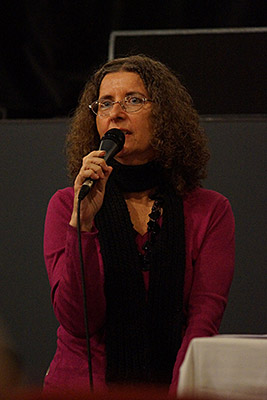
Irene Jung
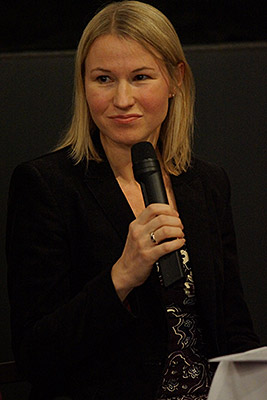
Monika Schäfer
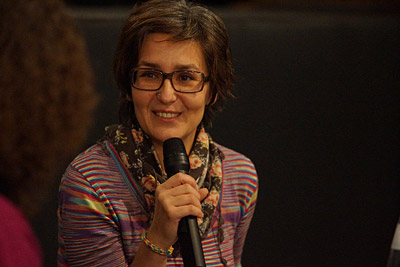 Margrit
Paal
Margrit
Paal 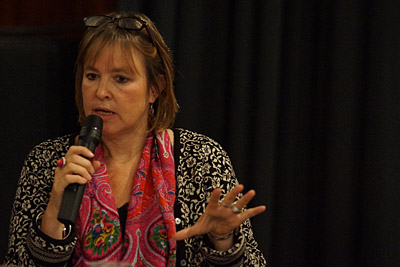 Heike
Hänsel
Heike
Hänsel 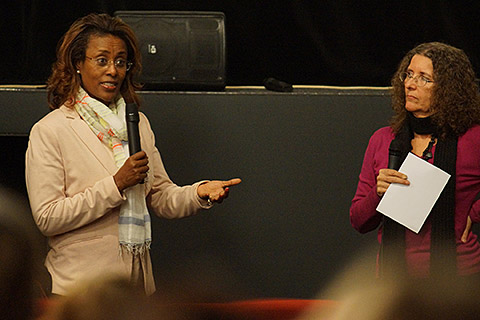 Screening
of DIFRET
Screening
of DIFRET
Lawyer Meaza Ashenafi and festival director Irene Jung at the conversation about the film “Difret”. The film is about Meazas story: a women’s rights activist, who collaborated as a very young lawyer on the Ethiopian constitution, where she embedded women´s and children´s rights, founded an association of women lawyers for the legal support of indigent women and girls, who experience violence and discrimination.
 “Difret” particularly
tells how Meaza in representation of her organisation tries to save a girl
from the death penalty, who was – due to the traditional forced marriage
in some parts of the country – abducted and raped, but killed her
rapist during her escape. Meaza was successful in her appeal and the girl
was saved from the death penalty. Meaza explains further aspects of her
commitment to the rights of Ethiopian women, a.o. the foundation of a bank
of and for women – the ENAT bank.
“Difret” particularly
tells how Meaza in representation of her organisation tries to save a girl
from the death penalty, who was – due to the traditional forced marriage
in some parts of the country – abducted and raped, but killed her
rapist during her escape. Meaza was successful in her appeal and the girl
was saved from the death penalty. Meaza explains further aspects of her
commitment to the rights of Ethiopian women, a.o. the foundation of a bank
of and for women – the ENAT bank.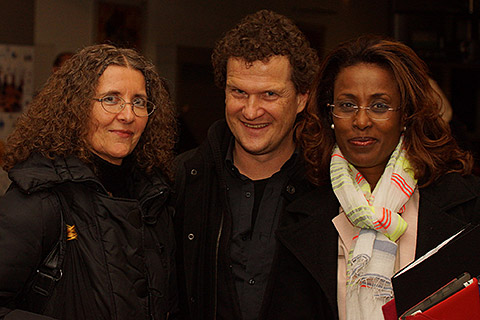 Irene
Jung, René Harder („Die Hüter der Tundra“) and Meaza
Ashenafi after the detailed conversation with the audience about “Difret”.
Irene
Jung, René Harder („Die Hüter der Tundra“) and Meaza
Ashenafi after the detailed conversation with the audience about “Difret”.
Photos: Alexander Gonschior