Festival Guests
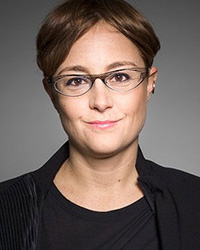 Laura
Bispuri
Laura
Bispuri
Film: Vergine Giurata – Sworn Virgin
Q&A:
Saturday, 26.11.2016, 8:30 pm, Studio Museum
Sunday, 27.11.2016, 6:00 pm, Studio Museum
Sunday, 27.11.2016, 8:15 pm, Cinema Waldhorn, Rottenburg
Laura Bispuri was born in Rome in 1977. There she studied Performing Arts with a focus on film and cinema. It became clear very fast how strong her bond with cinema was – it seems that this might run in the family: Her grandfather was responsible for the requisites of the most important Italian films and her father was a passionate film critic.
In 2003 Laura Bispuri was chosen by the producer Domenico Procacci out of more than 800 applicants for the Fandango Lab Workshop. Her short film Passing Time was honoured with the Donatello Award in 2010. The film received awards at many film festivals both in Italy and in foreign countries and was part of the selection of the seven most beautiful short films worldwide of 2011. In the same year, the young director received the Italian Critic’s Award Nastro d’Argento as the new young talent of the year.
Awards for Vergine Giurata (Selection):
2015 Firebird Award, Hong
Kong International Film Festival
2015 Sunny Bunny Award, Kiev International Film Festival Molodist
2015 Fipresci Award, PKO OFF International Festival of Independent Cinema,
Kraków
2015 Nora Ephron Prize, Tribeca Film Festival New York
2015 Golden Gate New Directors Prize, Int. Film Festival San Francisco
2015 Cinema Jove, Premio Cima a la Mejor película diriga por una mujer,
Festival Internacional de Cine de Valencia
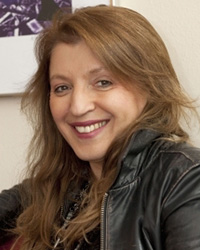 Mirjana
Karanović
Mirjana
Karanović
Film: A Good Wife
Q&A:
Tuesday, 29.11.2016, 6:00 pm, Studio Museum
Wednesday, 30.11.2016, 8:30 pm, Studio Museum
Mirjana Karanović, born in 1957 in Belgrad, is an internationally acclaimed actress and film director from Serbia. She had her debut in 1980 in the film Petrijin venac, where she played an illiterate Serbian woman. Her portrayal of the mother in Emir Kusturica’s film Otac na službenom putu (Papa is on Business Trip) made her internationally famous. In 2003 she accepted a part in the Croatian film Svjedoci, and so was the first Serbian actress to shoot a film in Croatia after the war in Yugoslavia. This provoked intense protests by Croatian nationalists, especially because she played a Croatian war widow in Svjedoci.
Under the direction of Jasmila Žbanić, she impressed in her role as a single mother in the Bosnian film Grbavica, which won the Golden Bear at the Berlinale 2006. For this performance, Karanović received various awards at international film festivals, as well as a nomination for the European Film Award 2006. She also took part in Jasmila Žbanić’s political engagement to achieve, through activities around the screening of this film, that the women who were raped during the Yugoslavian war would get recognized as war victims by the state.
Awards (Selection):
2016 „Nespresso“-Audience Award, ArteKino Festival (A Good Wife)
2016
George Gund III Memorial Central and Eastern European Film Competition,
Cleveland International Film Festival (A Good Wife)
2016 Jury Prize for
Best Actress, FEST International Film Festival (A Good Wife)
2016 FIPRESCI
Prize, Motovun Film Festival (A Good Wife)
2008 Winning of Freedom Award
for Women
2007 Actor’s Mission Award, Art Film Festival
2006 Best Actress, Brussels
European Film Festival (Grbavica)
DOCUMENTARY FILM GUESTS
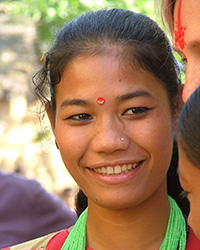 Urmila
Chaudhary
Urmila
Chaudhary
Film: Urmila – für die Freiheit
Q&A:
Thursday, 24.11.2016, 8:30 pm, Studio Museum
Friday, 25.11.2016, 6:00 h, Studio Museum
Urmila Chaudhary was born in 1986 in Dang, a small Nepalese district around 280 km west of Kathmandu close to the Indian border. She and her family are part of the indigenous Tharu people, who make up in total 13,5% of the population nationwide, and are officially recognised as a minority. The Tharu often live as farmers in great poverty on the lowest level of Nepal’s hierarchy.
When Urmila is 6 years old, her father gets sick – and the food for the family is getting even less than it used to be anyway. Urmila’s brother bargains – and gives the small girl for an amount of money to a rich man from Kathmandu to work for his family as Kamalari. Kamalari (meaning hard working woman) refers to both a form of slavery that exists in Nepal, as well as to the concerned persons. Kamalaris are typically girls from the Tharu people, who, due to economic need, get sold by their families for a certain amount of time, when they are very young, and have to work for rich families at their household under poorest conditions without any rights. After her freedom from servitude after 12 years, Urmila puts all her abilities into sparing other girls the fate as a slave. Already 13000 have been freed by her and her fellow campaigners, all Ex-Kamalaris! At the same time, she goes to school to get closer to her big goal: she wants to become a lawyer.
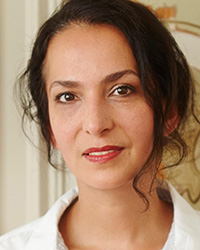 Güner
Yasemin Balci
Güner
Yasemin Balci
Film: Der Jungfrauenwahn
Q&A:
Saturday, 26.11.2016, 4:00 pm, Studio Museum
Panel discussion:
Saturday, 26.11.2016, 6:00 pm, Studio Museum
Güner Yasemin Balci was born in Berlin-Neukölln in 1975 and grew up
there.
In the 1960s both of Balci’s parents came from Turkey to Germany as
guest workers.
Their children were educated in as Alevis.For this reason, for example,
no one in her family wears a headscarf. After highschool Balci started
studying educational science and literature. Following her studies
she worked for a pilot project against violence and for crime prevention
in the Rollberg quarter – a socially deprived neighbourhood of ??Neukölln,
Berlin. She also worked at MaDonna, a youth club for girls from Turkish
and Arab families. Today Balci is working as a freelance journalist,
television editor and writer. She offers critical reflections in articles
and reports for Zeit, Spiegel Online and Panorama about the siuation
of migrants in German society.
Awards:
2016 Bavarian TV Award for Der Jungfrauenwahn
2012 Civis Television Prize for the WDR documentary Death of a judge
- In the footsteps of Kirsten Heisig
 Alina
Cyranek
Alina
Cyranek
Film: Ein Haufen Liebe
Q&A:
Sunday, 27.11.2016, 4:00 pm, Studio Museum
The German filmmaker Alina
Cyranek was born in Poland in 1979 and studied Media Art with a
focus on documentary at the Bauhaus-University of
Weimar and at the Tongji-University of Shanghai. Meanwhile, she lives
and works in Leipzig where she occupies herself mainly with experimental
videos and documentaries.
Her works get screened across borders, both at international film
festivals and at art exhibitions, and they have received numerous
awards. She
makes, among other things, films in which topics such as transience
or renewal get interwoven into a temporary context with New Media
and Social Change, using different media formats and design elements.
For
her film Scenes of a Farewell she received the Rider of Bamberg “Best
Documentary” at the 25th Short Film Festival Bamberg 2015.
Awards (Selection):
2015 Jury Award, FERFILM International Film Festival
(Szenen eines Abschieds)
2015 Special Mention, KURZSUECHTIG Festival (Szenen eines Abschieds)
2015 Jury Award, Bamberger Kurzfilmtagen (Szenen eines Abschieds)
2014 Special Mention, FILMZ Festival of German Cinema for the treatment
Ein Haufen Liebe
2014 Jury Award, Bundesfestival Video (Familienessen)
2013 Audience Award, Schmalfilmtage Dresden (TelH78)
2012 Jury Award & Audience Award, Filmforum Selbstgedrehtes (fractured)
 Susan
Gluth
Susan
Gluth
Film: Urmila – für die Freiheit
Q&A:
Thursday, 24.11.2016, 8:30 pm, Studio Museum
Friday, 25.11.2016, 6:00 pm, Studio Museum
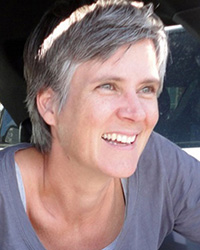
Susan Gluth was born in 1968 in Hamburg. After her commercial training she started working as an assistant of photography, then moved on to production management and production of advertising films. In 1995 she started her studies at the University for Television and Film in Munich in the field of Direction of Documentary Film and Television Journalism.
So far her film work has taken her to Mexico, Guyana, Brazil, China, Israel, Bhutan, Africa, the U.S. and Nepal, among other places. In an article by the Spiegel she learned about Urmila and her fight against slavery in Nepal. Gluth quickly realized that she wanted to make a film about this strong woman: Without any permission to shoot a film she faced the challenge of telling about the past of the liberated girls without being too explicit, and of handling their traumatized stories of slavery as respectfully as possible. However, in the end, the film was not about slavery, but about the power of women to change the world.
 Leona
Goldstein
Leona
Goldstein
Film: God is not working on Sunday!
Q&A:
Monday, 28.11.2016, 6:00 pm, Studio Museum
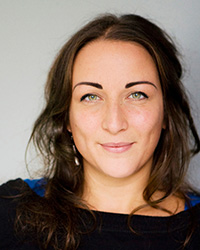
Leona Goldstein, born in 1976, studied photography in Rome and communication design in Berlin. The filmmaker, photographer and lecturer has dealt with a wide range of media expressions and content that led her to Cambodia, Vietnam, Mexico, Burkina Faso, Mali, Rwanda, the Ivory Coast and Kabul. The Jewish-born director has a personal connection to the topic of genocide and the question of forgiveness, through her family history. For God is not working on Sunday! Goldstein has been working in Rwanda, researching and establishing relationships. The result is a documentary film which has been designed decisively by the protagonists - victims of the most serious human rights violations. The interview partners had control of the situation at all times; they could break talks or change the subject. In addition, they were allowed to view and approve the material they had shot before publishing it. Thus, Leona Goldstein created a protective space, which enabled the survivors to share their traumatic experiences. At the same time, she generates respect and admiration among the audience for these women, who are dealing with the sensitive demands for forgiveness, do not lose their good humor and engage in solidarity for each other.
Awards for God is not working on Sunday!:
2016 BEST FILM, China Women's Film Festival
2016 AUDIENCE AWARD, The International Women's Film Festival Cologne
2016 PLATINUM AWARD: BEST FEATURE LENGHT DOCUMENTARY, International
Film Festival on Women's Rights and Social Issues, Indonesia
2016 BEST FILM AWARD, MIC Genero Festival Mexico
2016 BEST DIRECTOR, Berlin Independent Film Festival
2015 BEST DOCUMENTARY 2nd award, 12 month Film festival
2015 BEST HUMAN RIGHTS MOVIE, MOVE IT! Filmfestival, Dresden, Germany
2015 BEST DIRECTOR, "CINE WOMEN"
2005 XENOS Prize for Civil Society Engagement, Institute for New Media,
Rostock
 Renata
Keller
Renata
Keller
Film: Why Women need to climb mountains
Q&A:
Friday, 25.11.2016, 6:00 pm, Museum Cinema 2
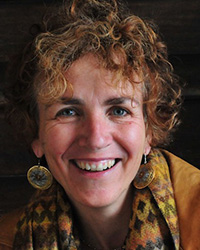
Renata Keller is an artist, filmmaker and graphic designer and lives in Berlin.
For more than 25 years she has been working in the area of Visual
Arts (Masters in Applied Imagination, University of Arts, London) and
is in charge of Vertical Impulse, a graphic design, film production
and art management company (www.verticalimpulse.com). She is also the
manager and art director of the philosophical magazine evolve. She
has dealt her whole life with philosophical and spiritual topics and
has tried to develop, also in the field of art and design, expressions
of an evolving world view.
www.womenneedtoclimbmountains.com
ExpertInnen
 Naïla
Chikhi
Naïla
Chikhi
Panel discussion:
Saturday, 26.11.2016, 6:00 pm, Studio Museum
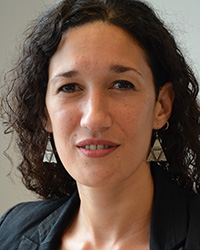
Naila Chikhi was born in Algiers, Algeria in 1980. Because of the political engagement of her liberal and feminist oriented parents during the dark years of the Algerian Civil War, she was forced to leave the country when she was 15 years old. First she lived in Tunisia, one year later in France, where she graduated from highschool with the focus on Economy and Social Sciences. During high school, she was member in the association „Bled Connexion“ - an association to support Algerian artists in Algeria and France.
1999 she emigrated to Germany. During her studies of Applied Language and Cultural Studies at the University Mainz, she was a representative for women and homosexuals, and an adviser for foreign students, member of the General Student Committee and as well a member of the Faculty Council. Since 2009 she lives in Berlin. She has taught migrants in literacy and integration courses, currently works as TERRE DES FEMMES expert for “Refugee Women‘s Rights”, and as well as project coordinator of the project “Godmothers for Refugee Women CONNECT”.
 Kinga
von Gyökössy-Rudersdorf
Kinga
von Gyökössy-Rudersdorf
Film: The True Cost
Q&A:
Friday, 25.11.2016, 4:00 pm, Studio Museum
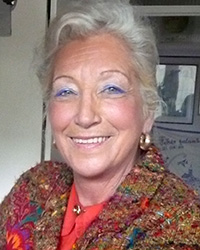
Kinga von Gyökössy-Rudersdorf was born in Budapest in 1942. When she
was 23 years old she came to Tuebingen for one year, where she worked
as a medical technician in the Institute for Radiology. In 1972 she
married the theologian and sociologist, Karl-Heinrich Rudersdorf, with
whom she worked in Afghanistan and in Jemen on behalf of the German
Development Aid Service. Sensitized through her observations in different
countries, Gyökössy-Rudersdorf became active for women‘s rights, in
many ways and continuing to this day.
Her engagement encompasses a. o. the Founding of the first autonomous
Women’s Shelter in Stuttgart, Membership in the advisory council of
the Association „Women help Women“, the Founding of the first German-Female
Migrant-Working-Group in Stuttgart, Work at the Women’s Network Stuttgart,
member of the organising committee of the International Women‘s Days
and the Equal Pay Days in Stuttgart, participation in the Working Group
Asylum of Stuttgart and Tuebingen, member of the Round Table against
Forced Marriage, Work at the Migration Commission at Ver.di trade union,
and her decades-long work as an expert for the Clean Clothes Campaign
(CCC) that took her also to production sites in China, where she found
appallingly unbearable working conditions.
For her engagement, the lively and humorous activist, Gyökössy-Rudersdorf,
was honoured in 2011 with the Brenz-Medal of the Protestant Church
in Wuerttemberg and received the Order of Merit of Baden-Wuerttemberg
in 2012.
Awards:
2012 Order of Merit of Baden-Württemberg
2011 Brenz-Medal of the Protestant Church in Wuerttemberg
 Saïda
Keller-Messahli
Saïda
Keller-Messahli
Panel Discussion:
Saturday, 26.11.2016, 6:00 pm, Studio Museum
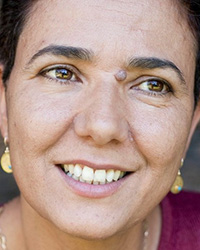
Saida Keller-Messahli was born 1957 in Tunisia into a 10-member, very poor family. When she was 7 years old, she was sent to a foster family in Switzerland after her father, who was a farmer, went completely blind. At the age of 13, she went back to her parents to Tunisia. In Tunis she graduated from a French secondary school and then went to Saudi-Arabia for two years to work as a flight attendant for the Saudi Arabian Airlines, to earn money for her university studies in Switzerland. Next she started to study Romance Studies, English Literature and Film Studies in Zurich. She worked, amongst other things, as an assistant at the University of Zurich, employee at the Cultural Foundation ProHelvetica, International Observer in Hebron on behalf of the EDA Eidgenössisches Departement für Auswärtige Angelegenheiten (Federal Department of Foreign Affairs), as journalist in the cultural department at the newspaper Die Weltwoche, and as a high school teacher for French in Zurich.
Saida Keller-Messahli is the best-known and most pointed critic of Islamism in Switzerland. She especially criticises the misplaced tolerance towards islamistic behaviour in Switzerland and the intolerance of the radical Islam towards dissidents. For this she receives death threats on a regular basis. She weighs in on the public debate, lectures, writes articles, argues on panels and advises Muslims and non-Muslims who have difficulties in their Islamic oriented milieu. She is the founder and president of the nonpartisan, independent Association Forum für einen fortschrittlichen Islam (Forum for a progressive Islam).
Awards:
2010 and 2016 Nomination for the Prix Courage of the Magazine Der
Beobachter (The Observer)
2016 Swiss Prize of Human‘s Rights of the Internationalen Gesellschaft
für Menschenrechte (International Society
for Human‘s Rights)
 Farida
Khalaf
Farida
Khalaf
Film: Háwar
Q&A:
Thursday, 24.11.2016, 6:00 pm, Studio Museum
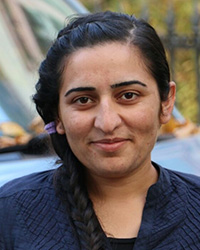
Farida was born 1996 in Iraq. She lived with her family in Kocho, a quiet village in the Sindchar mountains. In August 2014, when she finishes the next to last class of secondary school, IS-thugs attack Farida’s home. The supporters of the terror state rounded up all of the villagers, killed the men, and abducted the women. For months, Farida was held captive as a slave – and had to live through unimaginable pains. One day she dared to flee, together with five other girls, for whom she was the driving force.
Today the 20 year-old lives together with her mother and her three brothers at a secret address in Freiburg. In May 2015, she came to Germany within the context of a special quota of Baden-Wuerttemberg, in which 1000 women who were war victims were accepted as refugees. Her mother and brothers followed in October 2015. Her father along with her oldest brother are still missing. It is presumed that they were killed by the IS.
 Monika
Michell
Monika
Michell
Film: A Girl In The River
Q&A:
Sunday, 27.11.2016, 4:00 pm, Museum Cinema 2
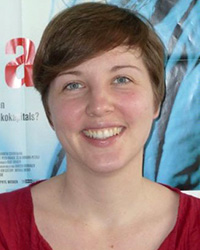
Monika Michell was born in 1978 and studied Romance Studies and Political Science at the University of Wuerzburg. Since 2010, she is a TERRE DES FEMMES expert regarding Violence in the Name of Honour, and worked initially at the main office in Tuebingen, later in Berlin. Between 2010 and 2011, she conceptualised and organized as a pilot project a series of workshops for town council employees in Baden-Württemberg, about the topics “Violence in the Name of Honour” and “Forced Marriage”. 2012 she conducted a nation-wide creative competition for young adults throughout Germany on the topic of forced marriage. Monika Michell is also engaged in lobbying and public relations work in her thematic core area.
Since September 2014, her work at TERRE DES FEMMES focuses especially on the issue of child marriage – the main demands here are a worldwide minimum age for marriage of 18 years, and that every compelled marriage that was undergone underage, also those contracted religiously/socially, should be punishable by law.
 Paradise & Diverse
(143Band)
Paradise & Diverse
(143Band)
Film: Sonita
Q&A:
Tuesday, 29.11.2016, 6:00 pm, Museum Cinema 2
Paradise and Diverse are an Afghan Rap Duo. They have been a couple since 2007, a year later they also joined to make music.
Everything started in the underground scene of the capital city of Kabul, where Pardadise had already been performing feminist music for four years. But the threats and violence against Paradise grew. “I was beaten multiple times and received threats.”, she said. “There are still a lot of fundamentalists in Afghanistan, they want to forbid making and listening to music.” In addition, she recounts, „it still happens that fundamentalists poison girls at school“.
"In 2008, I was the only one, today there are about five female rappers in Afghanistan," says Paradise. She tells how she always veiled herself on the streets of Kabul to protect herself from hostilities. But Paradise did not want to be intimidated and went on making music. In 2008, she founded a band together with Diverse. They secretly recorded songs in the studio, but they could not publish them, because of the threats. After the young women had been harrassed by men for an hour on the way back home from the studio, they asked the police for help. The answer was, "We've heard you're singers. Stop singing. "
Awards:
2014 Best rap artists, Rumi Music Awards
 Zana
Ramadani
Zana
Ramadani
Film: Der Jungfrauenwahn
Q&A:
Sunday, 27.11.2016, 4:00 pm, Studio Museum
Panel discussion:
Sunday, 27.11.2016, 6:00 pm, Studio Museum
Zana Ramadani was born in 1984 in Skopje (Yugoslavia, today's Macedonia). When the war broke out in the former Yugoslavia in the late 1990s, the then seven-year-old fled to Germany with her family. In her Sunni family her father was very liberal thinking, but in exile her mother became more and more conservative-religious. This is why Ramadani felt great differences between her education and the education of her brother: he was spoiled and allowed to do everything – she, a girl, was raised with unbelievable and often violent severity, she had no liberties. The mother was the driving force in this kind of unequal gender-based education.
Ramadani completed an apprenticeship as a legal assistant, and at the age of 18 she escaped from the attacks of her family into a women's shelter. She wanted to be politically active. That’s way she became a member of the CDU (Christian Democratic Union) and even became ChairWoman of the Junge Union (CDU Youth Organisation) in Wilnsdorf. Later she joined FEMEN and became co-founder and chairman of the association FEMEN Germany. The association criticizes violence against women, forced prostitution and human trafficking, as well as the patriarchal structures in the monotheistic religions. In the context of her commitment to Human Dignity, Women's Rights and against Islamism, Ramadani also took part in panel discussions of the Central Council of Ex-Muslims, a forum which is the object of violent attacks and threats on the part of Islamic circles, due to the renunciation of its members from the religion of Islam. Zana Ramadani also receives death threats on a regular basis.
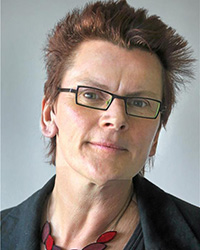 Micha
Schöller
Micha
Schöller
Film: India’s Daughter
Q&A:
Monday 28.11.2016, 4:00 pm, Museum Cinema 2
Micha Schöller is graduated Social Education Worker and has engaged
in the field of Violence Against Women for 25 years. She is part
of the counselling centres focusing on Sexualised Violence and Domestic
Violence at the „Women Help Women“ Association in Tuebingen.
The counselling centre focusing on Sexualised Violence offers women who experienced sexualised violence, supportive relatives, friends and peers, as well as multipliers and specialists support in crisis intervention, counselling and expertise.
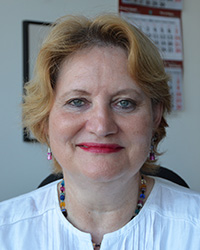 Christa
Stolle
Christa
Stolle
Film: Der Himmel unter den Füßen
Q&A:
Thursday, 24.11.2016, 4:00 pm, Studio Museum
Christa Stolle has been managing the human rights organization TERRE
DES FEMMES (TDF) for 26 years. During her university studies of ethnology
and empirical cultural anthropology, she first worked as a volunteer
on the Board of Directors of TDF. In 1990 she set up the office for
the association in Tübingen.
The TDF Foundation was established in 2004, and Christa Stolle took
over the management. The organisation moved to Berlin in 2011. Today,
she leads the association with around 35 full-time employees, 3500
members and supporters, and 100 voluntary activists throughout Germany.One
key experience led Stolle to her social commitment, a statement by
an ethnology professor: "Genital mutilation of girls and women
are culture. And culture should be protected." Stolle was deeply
shocked by this statement, it stirred her sense of injustice. That’s
what moved her to make fighting for the rights of women her profession.
Stolle also got aware oft he fact that women in Germany had many legal
rights on paper, but they were often not implemented. Male dominance
- in politics, in science, in the private sphere – remained unchallenged
in practice.
Awards:
2013 Presentation of the Bundesverdienstkreuzes - Federal Cross of
Merit - by Federal President Joachim Gauck
2012 Nomination for the Woman of Courage Award by the United States
Embassy in Germany
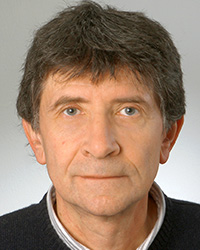 Bernd
Wolpert
Bernd
Wolpert
Filme: Bintou, Geheime Werkstätten
Q&A:
Friday, 25.11.2016, 6:00 pm, Studio Museum
Monday, 28.11.2016, 6:00 pm, Museum Kino 2
Bernd Wolpert was born in 1956. He studied German Language and Literature
as well as Philosophy and History. After concluding his studies with
a state examination he started working at the publishing house Radius
Verlag. Since 1989 Bernd Wolpert has been the director of EZEF (Protestant
Centre for Film in Relation to Development - Evangelisches Zentrum
für entwicklungsbezogene Filmarbeit), which is provided by Brot für
die Welt – Evangelischer Entwicklungsdienst, Berlin and Gemeinschaftswerk
Evangelischer Publizistik, Frankfurt.
Moreover he is a member of the executive commission of the TV-Workshop
for Development Policy (Fernsehworkshop Entwicklungspolitik), which presents
films and tv-productions with topics connected to development policies
and organises seminars to discuss them. The workshop´s aim is to present
innovative projects and to critically question representations as well
as to connect experts from the fields of film and media with experts
on developmental policy. Additionally, Bernd Wolpert has helped organising
the Africa-focus of the Französische Filmtage Tübingen-Stuttgart for
many years and has been a longstanding supporter of the CineLatino -
CineEspanol Tübingen-Stuttgart.
